Quick answer: Keep your baby’s information in one place and set it up in stages. Before the birth, plan feeding, rest, supplies and help. In the newborn weeks, log feeds, diapers and sleep. Before each checkup, write down your questions, and afterward record what the pediatrician said. Before anyone else cares for your baby, write down the routines, contacts and health details they will need. Save milestones and memories as they happen.
The first year brings a lot to remember: feeding times, diaper counts, vaccination dates, growth measurements, questions for the pediatrician and instructions for grandparents or daycare. When those details live in phone notes, sticky notes and memory, they get lost, especially on little sleep. This checklist walks through what to organize at each stage, so you can answer the pediatrician’s questions, hand off care with confidence and spend less time searching.
What should first-time parents plan before the baby arrives?
The third trimester is a good time to set up the practical side of the first weeks. Write down:
- Your feeding plan and who to call for feeding support
- A rest plan that shows who covers nights or naps so each adult gets sleep
- Baby supplies, a budget, the hospital bag and a restock list
- Postpartum recovery needs and practical help, such as meals, errands and rides
- Visitor preferences, so family knows when and how to visit
- Your pediatrician’s contact details and questions for the first visit
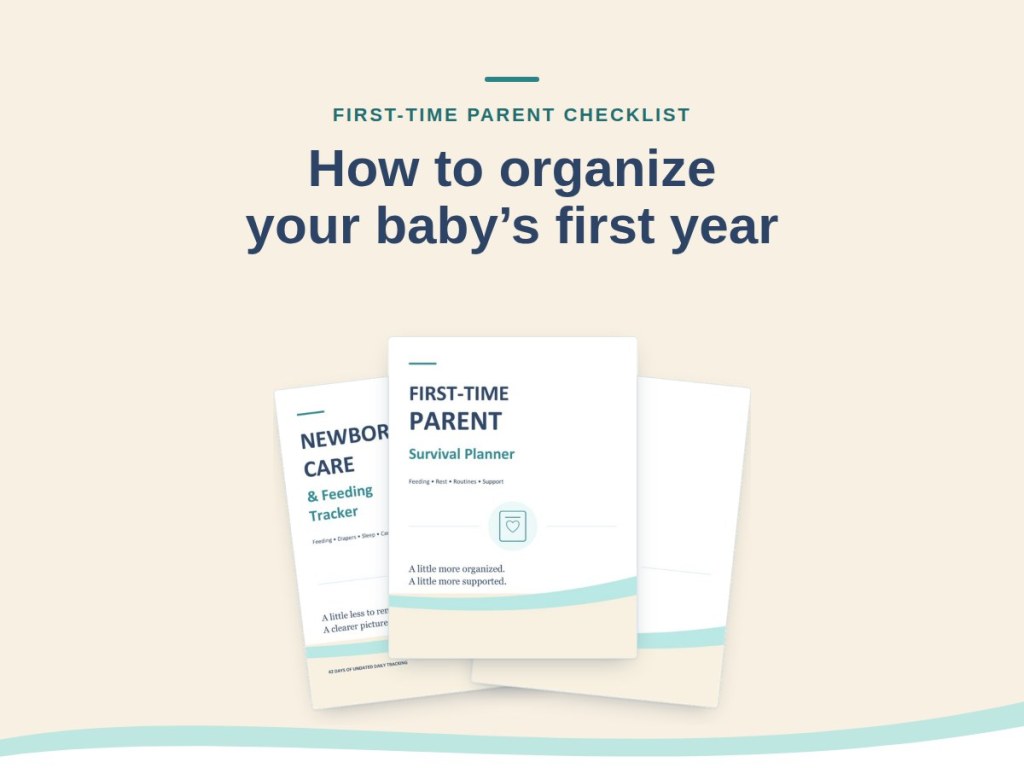
The First-Time Parent Survival Planner has pages for each of these, plus six undated weekly plans for sharing the work.
What should you track in the newborn weeks?
Track feeds, wet and dirty diapers, and sleep. These are the details you will be asked about most in the first weeks, and they help you see whether your baby is eating enough.
According to the American Academy of Pediatrics (HealthyChildren.org), breastfed newborns usually nurse about every 2 hours, which adds up to 10 to 12 feedings in 24 hours. Most bottle-fed newborns eat every 2 to 3 hours, and 8 feedings in 24 hours is generally the recommended minimum. In the first few days, a baby should have 2 to 3 wet diapers a day. After the first 4 to 5 days, expect at least 5 to 6 wet diapers a day.
For each day, note:
- The time of each feed, and its length (nursing) or amount (bottle)
- Wet and dirty diapers
- Sleep stretches
- Anything unusual, such as spit-up, fussiness, medicines given or questions to ask
A simple log turns “I think she ate a lot yesterday” into details you can share. If anything in your notes worries you, call your pediatrician.
The Newborn Care & Feeding Tracker has 42 undated two-page daily spreads for feeds, diapers, sleep and care notes, with feeding logs for nursing, expressed milk, formula or combination feeding.
How many checkups does a baby have in the first year?
The AAP recommends seven well-child visits in the first year: at 3 to 5 days old, then at 1, 2, 4, 6, 9 and 12 months (AAP schedule on HealthyChildren.org). These visits cover recommended immunizations, growth and development checks, and time for your questions.
To get the most from each visit, the AAP suggests making a list of topics and bringing your top three to five questions. Before the visit, gather:
- Your questions, written down
- Recent notes on feeding, sleep, diapers or symptoms
- Your baby’s vaccination record
- A list of any medicines or supplements
Afterward, write down your baby’s measurements, the advice you were given, any follow-up steps and the date of the next appointment.
The Baby Medical & Pediatric Appointment Journal pairs a preparation page with a visit record for twelve appointments, plus vaccination and medicine pages.
Which records should you keep in one place?
- Pediatrician, specialist and pharmacy contact details
- Where your baby’s insurance card is kept and the member services phone number
- Vaccination records
- Allergies, medicines and the dosing instructions your baby’s provider gave you
- Growth measurements from each checkup
- Where important documents are kept, such as the birth certificate
Privacy tip: write down where sensitive documents are stored instead of copying ID or account numbers into a notebook that other people may see.
Baby’s First Year Organizer & Medical Binder keeps health records, daily care and milestones together. For one workbook that also covers daycare, travel and family plans, see Baby’s Complete Information & Care Organizer.
What does a babysitter or daycare need to know about your baby?
Anyone who cares for your baby should be able to find these details quickly:
- Feeding, nap and comfort routines
- Allergy plans and medicine instructions
- Emergency contacts and your pediatrician’s details
- Who is allowed to pick up your baby
- Household rules and home safety notes
- How to reach you, and a backup contact if they can’t
Add the Poison Help line, 1-800-222-1222, which connects callers in the U.S. to their local poison center (HRSA Poison Help). Your daycare may also require its own official forms. Your notes are a handy reference, but they don’t replace those forms or grant consent or pickup authorization.
The Daycare & Babysitter Information Binder covers routines and handoffs. The Baby Emergency Information Binder gives a backup caregiver a quick summary if plans change suddenly.
How can you keep milestones and memories without extra work?
Pick one page per month. Note firsts, a favorite photo, the latest measurements and a sentence about what your baby is like right now. Five minutes a month adds up to a year-long keepsake. Memory notes are for you, not a developmental screening; ask your pediatrician about milestones at each checkup.
The Baby Milestone & Health Record Book has twelve monthly chapters that combine memories and care notes, with spaces for photos, firsts and a first-birthday letter to your child.
First-year organizing checklist
| When | What to do | Helpful book |
|---|---|---|
| Third trimester | Plan feeding, rest, supplies, help and visitors | First-Time Parent Survival Planner |
| First 6 weeks | Log feeds, diapers and sleep every day | Newborn Care & Feeding Tracker |
| Each checkup | Bring questions; record measurements, advice and next steps | Baby Medical & Pediatric Appointment Journal |
| Months 1–12 | Keep health records, routines and milestones together | Baby’s First Year Organizer & Medical Binder |
| Before childcare starts | Write down routines, contacts and health instructions | Daycare & Babysitter Information Binder |
| Anytime | Prepare a backup caregiver summary | Baby Emergency Information Binder |
Frequently asked questions
When should I start organizing my baby’s information?
The third trimester is ideal, because you have more time before the birth. You can start at any point, though. Undated pages let you begin on any day.
Should I use an app or a paper planner?
Either works. Paper is easy to hand to a sitter, bring to appointments and use without a charged phone. Many families use both.
What is the most important thing to track for a newborn?
Feeds and wet and dirty diapers. Along with growth at checkups, they are common signs of whether a baby is getting enough to eat.
How many well-child visits are in the first year?
Seven, according to the AAP schedule: at 3 to 5 days, and at 1, 2, 4, 6, 9 and 12 months.
What should be in a baby emergency binder?
Emergency contacts, a quick caregiver summary, medical history, allergies and medicines, daily routines, daycare details and where important documents are kept.
Sources
- How Often and How Much Should Your Baby Eat? (HealthyChildren.org, American Academy of Pediatrics)
- AAP Schedule of Well-Child Care Visits (HealthyChildren.org)
- Poison Help (Health Resources and Services Administration)
This article is for general information and organization. It is not medical advice. Always follow the guidance of your child’s pediatrician and care team.


Responses
[…] For the bigger picture, including the full list of first-year well-child visits, see our first-year checklist for new parents. […]
LikeLike
[…] you already log feedings and naps, the routine section is quick to fill in. Our post on how to organize your baby’s first year covers what to track in the newborn […]
LikeLike
[…] Later, the same habit helps when someone else is in charge. A filled-in day makes it easy to copy your baby’s routine onto a babysitter information sheet. For the bigger picture, see how to organize your baby’s first year. […]
LikeLike
[…] binder is one piece of a bigger system. Our first-year organizing checklist shows where emergency pages fit beside feeding logs, visit notes and […]
LikeLike
[…] For the wider picture, see how to organize your baby’s first year. […]
LikeLike