Before your baby’s 2-month checkup, track a simple week of feeding, wet and dirty diapers, sleep, and any symptoms or questions as they come up — and bring that record with you. Pediatricians make better decisions from patterns you observed at home than from a tired parent’s memory in the exam room, and the 2-month visit is a busy one, with growth checks, development questions, and the first round of scheduled vaccines.
Why the 2-month visit matters
Around two months, your pediatrician checks how your baby is growing along their own curve, how feeding is going, head and muscle development, and early social responses like smiling and cooing. It is also usually the first big vaccination visit, so part of the appointment is explaining what each vaccine is for, what reactions are common afterward (mild fever, fussiness, a tender leg), and when a reaction is worth a call.
You will remember more of that conversation if you are not also trying to reconstruct two months of feeding and sleep from memory.
What to track in the week before the visit
Keep it light — a simple daily note, not a second job:
- Feeding: how often, roughly how much (minutes nursing or ounces in a bottle), and any trouble such as spitting up, fussiness during feeds, or refusal
- Diapers: approximate wet and dirty counts — big changes are what matter
- Sleep: roughly how long stretches are, day versus night, and what settling looks like right now
- Temperature or symptoms: any fever, rash, cough, congestion, or unusual crying, with the date
- New things: first real smiles, cooing, head lifting during tummy time, following faces — the pediatrician will ask, and it is lovely to have answers ready
Questions worth writing down before you go
Questions evaporate the moment the exam starts, so write them as they occur to you during the week:
- Is my baby’s weight gain on track for them?
- Does this feeding pattern sound right, or should we adjust amounts or timing?
- What reactions are normal after today’s vaccines, and exactly when should I call?
- How much tummy time should we be doing, and what should I watch for?
- Is this rash / cradle cap / baby acne / belly-button or circumcision healing normal?
- When should we be seen next, and what happens at that visit?
Bring your baby’s vaccination record if you were given one, your insurance card, and a spare outfit and diaper for after the exam — experienced parents pack for the blowout, not the plan.
During and after the appointment
Write down the answers while you are still in the room, or immediately after in the car: current weight, length, and head measurement; any feeding or care changes the pediatrician suggested; vaccine aftercare instructions; and the date of the next visit. If the pediatrician says “call if…” — finish that sentence on paper before you leave. “Call if the fever goes above…” is only useful with the number attached.
That written record becomes more valuable at every visit. By the 4-, 6-, and 9-month checkups you have a real history — growth, questions asked, answers given, reactions noted — instead of a stack of portal printouts you never look at.
A gentle note on growth charts
Babies grow at different rates, and a single measurement is a snapshot, not a verdict. Pediatricians look at the pattern over time and at how your baby feeds, sleeps, and develops overall. If something needs watching, your pediatrician will tell you what to watch and when to come back — that plan, written down, is exactly what your appointment notes are for.
That is exactly the habit the Baby Medical & Pediatric Appointment Journal is built for: one preparation page before each visit, and one record page for the answers.
These books and this article are for organization and general education only — they are not medical advice and do not replace your pediatrician’s guidance. Always follow your own care team’s instructions for your baby, and call them promptly with any medical concern.
Get the book
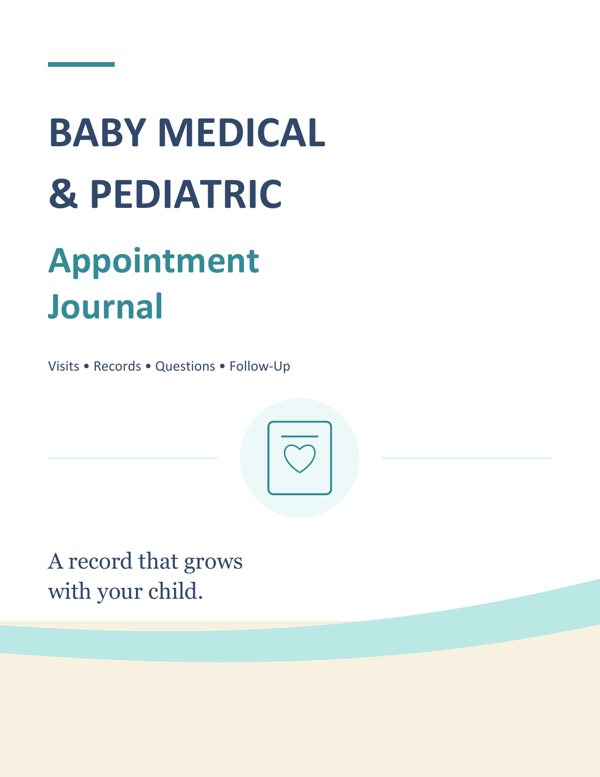
Baby Medical & Pediatric Appointment Journal — a preparation page before each visit and a record page for what was discussed, so no question or answer gets lost.
Get it on Amazon: https://www.amazon.com/dp/B0HKFJKW3L
Frequently asked questions
What happens at the 2-month checkup?
A full physical exam, growth measurements, developmental questions, feeding discussion, and usually the first scheduled set of vaccines, with aftercare guidance for common reactions.
What should I bring to the appointment?
Your tracked notes and question list, your baby’s vaccination record if you have one, insurance card, and spare clothes and diapers for the baby.
My baby has a mild fever after vaccines — is that normal?
Mild fever, fussiness, and a tender leg in the first day or two are commonly described as expected reactions. Your pediatrician will tell you exactly what is normal and when to call — follow that guidance for your baby.
Do I need to track everything perfectly?
No. A rough, honest week of notes is far more useful than a perfect system you abandon. Patterns matter more than precision.
How do I remember what the pediatrician said?
Write it down during or right after the visit — measurements, advice, warning signs with numbers, and the next appointment date — in one place you will actually keep.


Leave a Reply